
Hi there!
My name is Danna McCormick, and I wear a lot of nature-oriented hats. I’m a –
- DC Master Naturalist through UDC
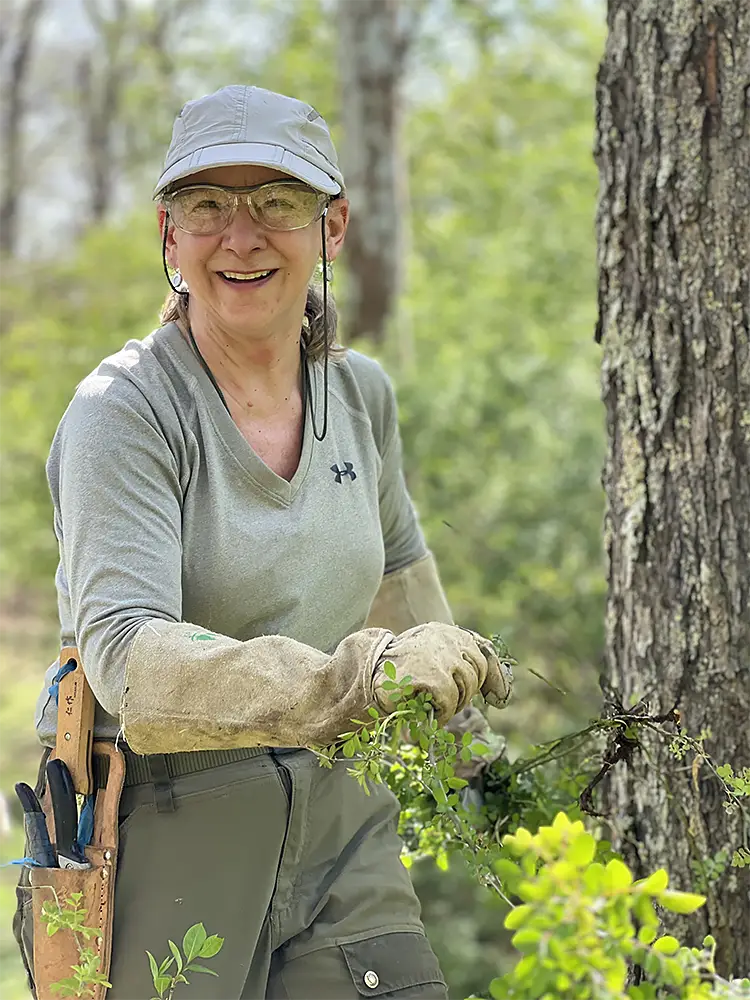
- NPS Weed Warrior Leader in Rock Creek Park in Washington DC, trained and permitted to remove invasive plants and lead volunteer groups
- Conservation Steward with DC’s DOEE
- Certified Pollinator Steward through Pollinator Partnership
- Native plant advocate
- Gardener, maintaining my private native gardens as well as an urban triangle park
- Educator and speaker to garden clubs and community groups on native and invasive plants, and how to make changes to your property to support biodiversity.
Please be in touch if you’d like to volunteer or train with weed warriors, would like a consultation on your property, or would like a speaker for your organization.

Looking back on another summer project, reclaiming part of the grass lawn for a new pollinator bed. A year ago, I put down biodegradable garden paper with mulch on top. By spring, it was ready to plant. I laid a path with a rock border and planted a dozen different native plants, most I hadn’t grown before. Still a work in progress, but very fun and so much more interesting! I’ve changed my grass to be paths, not wall to wall carpeting.
:
:
#plantnative #pollinators


Recently I’ve been reading a lot about “closing the loop”, meaning keeping all of the sticks, leaves, and cuttings on your property rather than dumping them in the landfill. Instead, turn the debris into brush piles or “habitat piles”. The opportunity presented itself when I removed a bunch of bush honeysuckle and privet and limbed up some Norway maples (all invasive, good riddance). These pics - in reverse order - show the process. The result should provide habitat and protection for birds, reptiles and small mammals (calling all foxes and opossums!) and as it decomposes, food for the soil. I have no idea if I’ve done it right, but I love the creation.
:
:
#habitatpiles #horticulture

Before this nor’easter hit Snakeroot (Algeratina altissima) was in its glory. Fluffy mounds of white flowers, covered in pollinators. Completely deer resistant - it’s toxic- which makes perfect for hedges. Love this plant!
:
:
#plantnative #nativeplants

My first capture of an assassin bug! He wasn’t too camouflaged against the Agastache. But boy is he a looker!
:
:
#insect #assasinbug #plantnative


The clandestine view through a screen from a bathroom. The only way I seem to be able to capture them! Cardinal flower.
:
:
#hummingbirds
#plantnative

White Vervain, (Verbena urticifolia) holding its ground while surrounded by invasive plants. With tiny white blooms it’s not a show stopper but it packs a big punch for ecosystems. It’s a pollinator powerhouse plant, a host plant, attracts butterflies, bees, and hummingbirds, and songbirds eat the nutritional seeds. Growing wild in Rock Creek.
:
:
#loverockcreek #rockcreekpark #nativeplants

I visit this old pine tree covered in moss each summer. But this is the first time I’ve explored it while reading @robinwallkimmerer ‘s Gathering Moss. Sublime. A whole new level of awe.
:
:
#moss #pinebarrens #quiogue

A little stream side magic from Picnic Grove 1. Snakewort (liverwort), Deer tongue grass (who names these things?), Golden ragwort, sedges, Woodsy thyme moss, flea bane, oak sapling. Lovely to witness these native plants as they should be.
:
:
#nativeplants #loverockcreek #rockcreekpark

Nature carries on, even in a densely urban area. I noticed most of the leaves on this oak sapling had been eaten. Looking under a leaf revealed a plump caterpillar. INaturalist identified which moth it will become, Amphipyra. If it doesn’t end up as baby bird food first!
:
:
#moths #oaks

Spring in Rock Creek Park!
Beaver activity, a pair of Wood ducks, and Herring running upstream.
:
:
#loverockcreek #rockcreekpark #beavers #woodduck

The Weed Warrior A Team. Rock Stars every one. Invasive plants don’t stand a chance. Join us!
:
:
#loverockcreek #rocrweedwarriors #rockcreekpark #invasivespecies #invasiveplants
